Explainer: Why Container Ships Are Getting Bigger and What It Means for Small Ports
Mega-ships keep growing because the maths rewards size, but draft limits and shore-side costs put small ports in a bind. Here's what to watch.
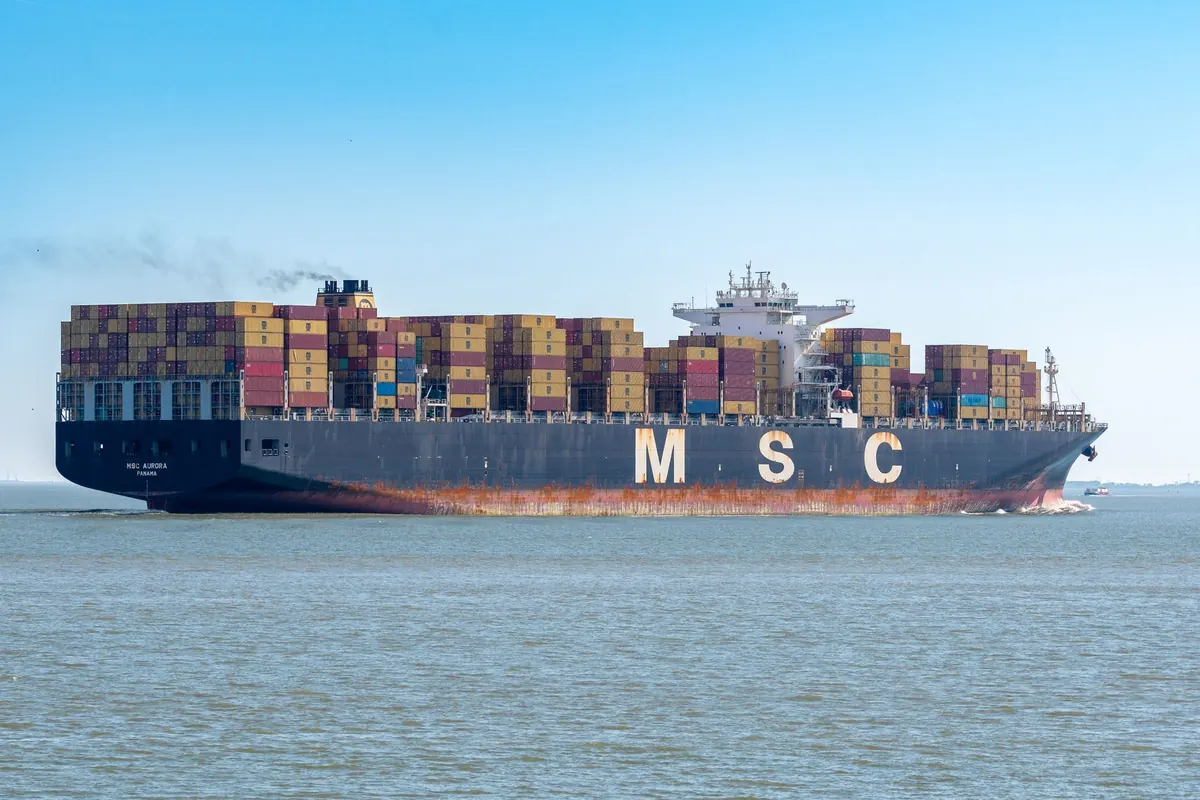
A decade ago, a 10,000 TEU container ship was the biggest thing on the water. Today it is a mid-sized workhorse, and the largest vessels afloat carry more than twice that. The change did not happen because carriers fell in love with giant ships. It happened because the arithmetic of moving boxes rewards size — up to a point, and that point is usually a harbour.
The arithmetic behind the arms race
Think about what changes when you stretch a ship. Crew size barely moves. A vessel carrying 2,000 boxes and one carrying 20,000 both need a master, officers, engineers, a cook and a galley. Fuel consumption per container falls, because a longer hull pushes through water more efficiently and engine power grows more slowly than capacity. Insurance, drydocking and port dues rise, but not in proportion.
Add it up and the cost of carrying one box across an ocean on an ultra-large ship can be a fraction of what it costs on a small one. That is economies of scale in its plainest form: the fixed costs get spread over more cargo.
The catch is that the advantage only exists on certain routes. Ultra-large ships work on the long trunk lanes, where volumes are dense enough to fill them and the ports at both ends are deep enough to take them. Put one on a thinner trade and it sails half empty. Every empty slot is a cost with no revenue attached, which is why carriers shuffle these vessels between strings so aggressively when demand shifts.
Draft is the hard ceiling
Almost everything in shipping can be built, bought or negotiated. Water depth cannot be argued with.
A ship loading 20,000 boxes draws somewhere near 16 metres. To take it, a port needs a channel and berth to match, plus a margin for squat — the way a moving hull settles lower in shallow water — tide and weather. Many ports time arrivals to high water, which works beautifully until a schedule slips and the ship has to wait outside for six hours.
Dredging is not a one-time purchase either. Channels silt back, and maintenance dredging is a recurring bill with permits, environmental review and somewhere to put the spoil attached to it. Ports that deepen once and stop tend to find themselves shallow again within a decade or two.
The constraints above the water matter just as much. Bridges set air-draft limits on approach channels, and the raising of the Bayonne Bridge was as important to New York's container trade as any dredging project. Baltimore's Francis Scott Key Bridge imposed a practical ceiling on what could reach the inner terminals until its collapse in 2024 — a reminder that a port's real capacity is set by its narrowest point, not its widest.
The bill on shore
Deep water gets the headline. The terminal behind it gets the invoice.
Start with cranes. A ship stowing containers 24 across needs ship-to-shore cranes that can physically reach that far. A port with older, smaller cranes cannot work the vessel no matter how deep the channel is, and a single new mega-crane is a serious capital project on its own. Berth length, apron strength and mooring arrangements all need to be checked against the same standard.
Then there is the land. The yard, the gates, the rail connection and the truck lanes all have to absorb the same annual cargo in fewer, larger pulses.
The surge problem
Picture a port that used to receive five calls a week from 4,000 TEU ships. Replace those with one weekly call from a 20,000 TEU ship and the yearly volume is roughly unchanged. The workload is not. Thousands of boxes land in a day or two. Yard space, reach stackers, rail lifts and gate lanes sized for a steady flow now face a spike, followed by days of quiet.
The connectivity problem
A port that loses its direct call has not lost the cargo. It has lost the direct call, which is a different and often worse problem. Cargo reroutes through a larger hub and comes back by feeder vessel, barge or rail shuttle. That adds handling, transit time and cost, and it hands scheduling power to someone else. For an exporter in the region, it can mean a week added to a booking and a less predictable cut-off.
Options for a port that will not be a mega-hub
- Specialise. Project cargo, breakbulk, ro-ro, wind components and bulk do not care about 16 metres of draft, and they often pay better per tonne than a box.
- Become a feeder hub. If the big ships will not call, serve the ones that do. Reliable barge and short-sea connections are a genuine product.
- Compete on the landside. A port that turns a truck in twenty minutes and clears cargo quickly can win business that a congested mega-port cannot handle.
- Chase a niche with infrastructure you already own. Transshipment, bunkering, repair, layup and offshore support all use deep water without needing a 24-wide crane fleet.
- Fix the bottleneck you actually have. Gate hours, customs dwell time and rail access are usually cheaper to improve than a channel.
- Say no early. Chasing a service you cannot serve profitably ties up capital for years.
What to watch, and what to do about it
The question is rarely whether a port can handle a bigger ship once. It is whether it can handle one every week, for years, and still make money on it.
For port planners, the useful habits are unglamorous. Track carriers' deployment plans rather than the launch of the newest record-breaker. Commission a real survey of berth depth instead of trusting a charted figure, and account for tide and squat. Model the weekly surge, not the annual total. Ask a carrier directly what a call would require — length overall, arrival draft, crane outreach, gate windows — and compare that list honestly against what exists today.
For shippers and freight forwarders, the practical lesson is to know which of your lanes depend on a direct call and which already run through a hub. Build a little slack into schedules that touch smaller ports, and read surcharges carefully when services are redesigned. Consolidation of calls is usually announced quietly, in a schedule update, long before anyone issues a press release.
Ships will keep growing where the trade supports them, and they will stop growing where the water, the bridges and the terminals say so. Small ports are not doomed by that. They are simply being asked to choose what they are for — and to be good at it.
Photo: Fred dendoktoor / Pexels