

Comparing Bulk Carriers, Container Ships, and Ro-Ro Vessels
Bulk carriers, container ships and Ro-Ro vessels each move different cargo, need different berths and run different routes — here is how they compare.

Stand at the fence of a working port at dusk and you can usually tell the three great families of merchant ship apart before you read a name on a hull. A bulk carrier rides low and slab-sided, hatches sealed over cavernous holds. A container ship rises like a stacked bookshelf. A Ro-Ro sits high and boxy, a floating car park with a ramp at the stern. They cross the same oceans, but almost nothing else about them is the same — not the cargo, not the berth, not the timetable.
Three ships, three ideas
Each class is built around one central question: how does the cargo get in and out?
Bulk carriers
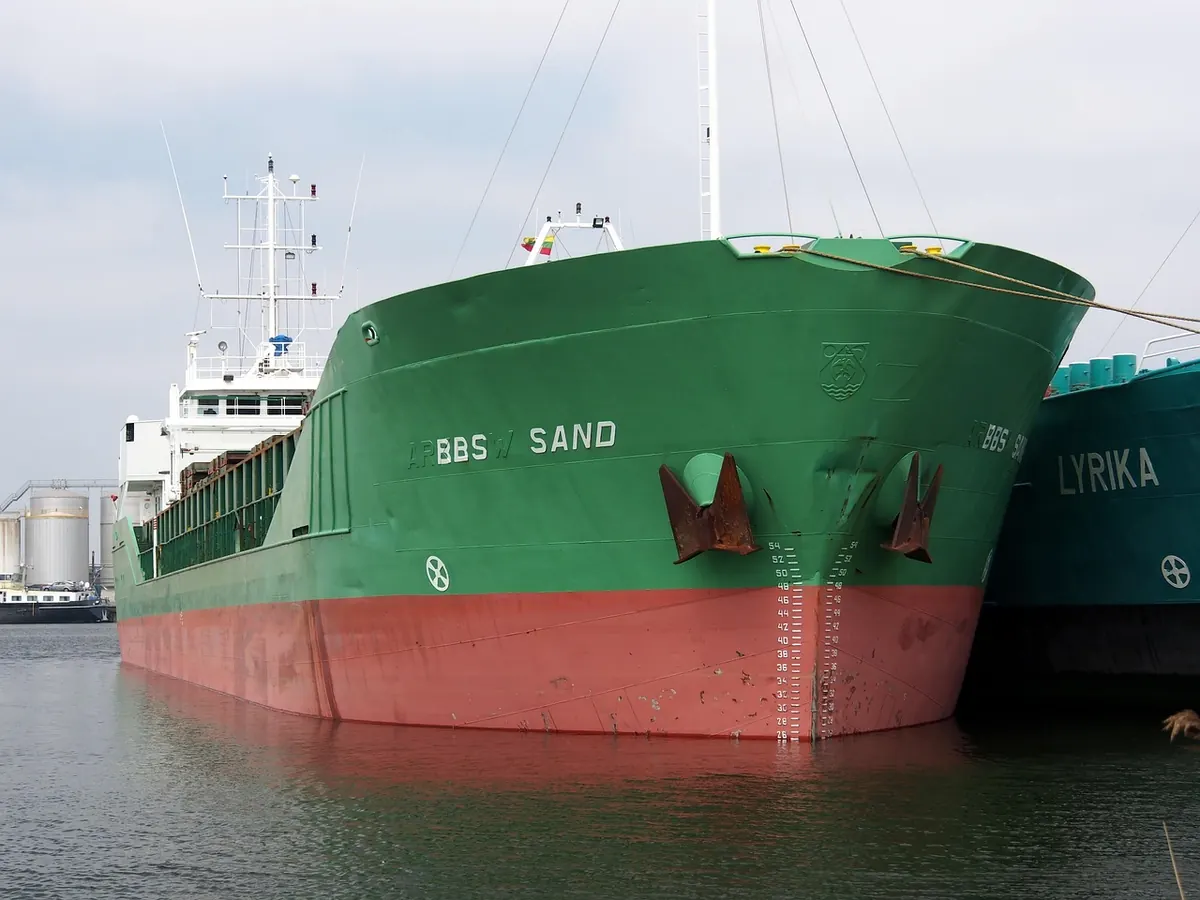
A bulk carrier is a hold with a lid. Its cargo is loose and largely uniform, so the ship is designed around cubic capacity, deadweight and fast pouring rather than speed. Holds are hopper-sided so cargo slides toward the grabs, and hatches are wide so a grab or a conveyor spout can reach every corner. A geared Handysize with its own cranes can work a berth in a small port that owns no shore crane; a gearless Capesize is helpless without a properly equipped terminal.
Container ships
A container ship is built around a slot, not a hold. Every box conforms to the same footprint, so the ship can be planned like a filing cabinet. Cellular guides hold stacks below deck, lashing bridges and twistlocks hold them above, and reefer plugs line the bays for refrigerated cargo. The payoff is standardisation: any crane in any port can handle any box.
Ro-Ro vessels
A Ro-Ro is a multi-storey roadway with engines. Cargo stays on wheels — its own or a trailer's — and is driven or towed up a ramp. Capacity is measured in lane metres rather than tonnes, and decks need ventilation, lashing points and enough headroom for a loaded trailer. Nothing is lifted, so nothing needs a crane.
What goes aboard, and how it is handled
- Dry bulk: iron ore, coal, grain, bauxite, fertiliser, sugar, cement and wood chips, poured through spouts or scooped out with grabs.
- Breakbulk on bulkers: steel coils, sawn timber, bagged cargo and occasional project pieces, especially on geared ships calling at smaller ports.
- Containers: manufactured goods, electronics, clothing, chemicals and food in reefers, lifted on and off by gantry crane and tracked box by box.
- Ro-Ro cargo: cars, vans, buses, trucks, trailers, tractors and construction machinery, plus high-and-heavy units that roll on a lowbed trailer.
Rule of thumb from the quay: if it rolls, it Ro-Ros. If it pours, it bulks. If it is boxed and expected on a Tuesday, it contains.
Terminals: what each class needs at the berth
A bulk terminal is mostly about storage and cargo handling: deep water, stockpiles or silos behind the quay, grab cranes or a continuous ship unloader, hoppers, conveyor loaders and serious dust control. Rail or barge links matter, because a bulk cargo that cannot leave the port by train or barge will sit there.
A container terminal is a logistics machine. Quay gantry cranes, a wide paved yard, stacking cranes, reefer plug banks, a gate complex and rail connections all have to work in step. A container port with a weak yard is a bottleneck no matter how fast the cranes are, which is why yard planning and vessel stowage software are as important as steel.
A Ro-Ro berth looks deceptively simple: a ramp, either the ship's own or a shore ramp, a large flat apron and marshalling space for hundreds of vehicles at a time. Add sheds for customs inspection of cars and a steady stream of drivers who know how to load six vehicles a minute. Ro-Ro terminals live or die on how quickly traffic can be driven on and off.
Routes: where each class earns its keep
Bulk carriers are the tramps of the fleet. Iron ore moves from Brazil and Western Australia to China and Japan; coal from Indonesia, Australia and Colombia; grain from the US Gulf, Argentina and the Black Sea toward Asia, North Africa and the Middle East. Shorter runs carry aggregates, fertiliser and cement around the Baltic, the Mediterranean and the Gulf.
Container ships run liner services on fixed weekly strings: Asia to North Europe through Suez, the transpacific to the US west coast, Asia to the Mediterranean, plus dense regional networks in intra-Asia, Latin America and short-sea Europe. Reliability, not raw tonnage, is the product being sold.
Ro-Ro traffic falls into two habits. Deep-sea car carriers shuttle between Japan, Korea and China and the big import markets in Europe, North America and the Middle East. Short-sea and ferry Ro-Ro keeps unaccompanied trailers moving across the North Sea, the Irish Sea, the Channel and the Mediterranean, often overnight.
Schedule, speed and cargo care
The commercial rhythm differs as much as the hardware. A bulk carrier is chartered for a voyage or a period and sails when the cargo is ready; port time, not sea time, usually decides the money. A container ship sails to a timetable and a missed berth window ripples down the whole string. Ro-Ro sits between the two, with car carriers running semi-liner schedules and ferries running like buses.
Cargo care differs too. Some bulk cargoes can shift or behave unpredictably when they are too wet, which is why international rules govern what may be loaded and how it must be declared. Container cargo needs correct lashing and weight declaration, and refrigerated boxes need monitoring throughout the voyage. On car decks, fire safety — particularly where lithium-ion batteries are involved — is one of the live problems the industry is working on.
Where the three overlap
The lines are not clean. Bagged rice, steel and liquid cargoes in flexitanks can travel in bulk, in containers or on pallets. Small geared bulkers compete with container lines for bagged and palletised cargo in West Africa and Latin America. Vehicles and machinery can be containerised, but for volume, Ro-Ro is usually simpler and faster. Combination ships exist precisely because shippers want options on one hull.
Before you book: five practical questions
- What form does the cargo naturally take — loose, boxed or wheeled?
- Do the load and discharge ports actually have the equipment the ship requires?
- Which matters more on this shipment, freight cost or schedule reliability?
- Who pays for stowage, lashing and securing, and who inspects it?
- What do the terms say about laytime, demurrage and cargo insurance?
If you are new to a trade lane, take those five questions to a freight forwarder or shipbroker who already works it. A fifteen-minute conversation about berth draught, crane capacity and port rotation will save more money than any rate negotiation. The ships themselves are honest about what they do; the difficulty is usually in matching the right hull to the right quay, the right cargo and the right week.
Photo: Emre Ayata / Pexels